Estimating underground utility work requires exact variables. A generalized price sheet will not survive contact with Arizona soil. When ISPs, carriers, and general contractors calculate the horizontal directional drilling cost gilbert az, the final number depends entirely on the specific alignment. Four main factors dictate the bid: total bore length, subsurface ground conditions, equipment access, and final restoration requirements.
This guide breaks down how each variable shapes the budget for dry utility and fiber builds in the Phoenix Metro area. It provides a clear framework for evaluating estimates, anticipating change orders, and keeping your underground construction projects on schedule.
Total Bore Length and the Mobilization Ratio
The length of the bore completely changes the math on the invoice. Directional boring is heavy civil construction. Moving a drill rig, a hydro vacuum truck, flatbeds, material trailers, and a full crew to a site carries a fixed cost. Contractors call this mobilization.
On a short bore, mobilization and setup eat up the budget. If you need a single 60 foot crossing under Warner Road, the crew still has to load out, drive to site, set up traffic control, pothole the existing utilities, and mix drilling fluid. The actual drilling might take one hour, but the project takes a full day. Because of this, short crossings carry a high directional boring cost per foot.
Long runs dilute that fixed setup cost. A continuous 2,000 foot fiber backbone build allows the crew to spend multiple days in pure production mode. They set up the rig once, drill out hundreds of feet per shift, and pull back the pipe. High production rates lower the unit cost. When planning a build, grouping several short crossings into one continuous mobilization will always yield a better overall price.
Ground Conditions Under the Phoenix Metro
Gilbert dirt is rarely just dirt. The composition of the soil dictates how fast a drill can move and what tooling the crew must use. Boring through standard sandy loam allows a crew to push several hundred feet per day using a standard spade bit. The work is fast, predictable, and highly efficient.
Caliche changes the timeline completely. Caliche is a natural cement formed by calcium carbonate binding soil particles together. It runs in thick, unpredictable layers across the East Valley. Pushing through caliche requires specialized rock bits, mud motors, and significantly more drilling fluid. The crew must pull back, ream the hole multiple times, and clear out the cuttings before they can pull the pipe. Hitting caliche instantly drops the daily production rate, which increases the labor cost for that segment.
Cobble presents a different problem. Large river rocks and loose cobble do not cut cleanly. They deflect the drill head off the intended alignment. Navigating cobble requires constant steering corrections and highly experienced operators to prevent striking adjacent lines.
Smart contractors review geotechnical reports and historical bore logs for the specific neighborhood before committing to a daily production rate. A bid that assumes perfect soil across the entire alignment will inevitably result in a change order when the drill head hits rock.
Site Access and Setup Constraints
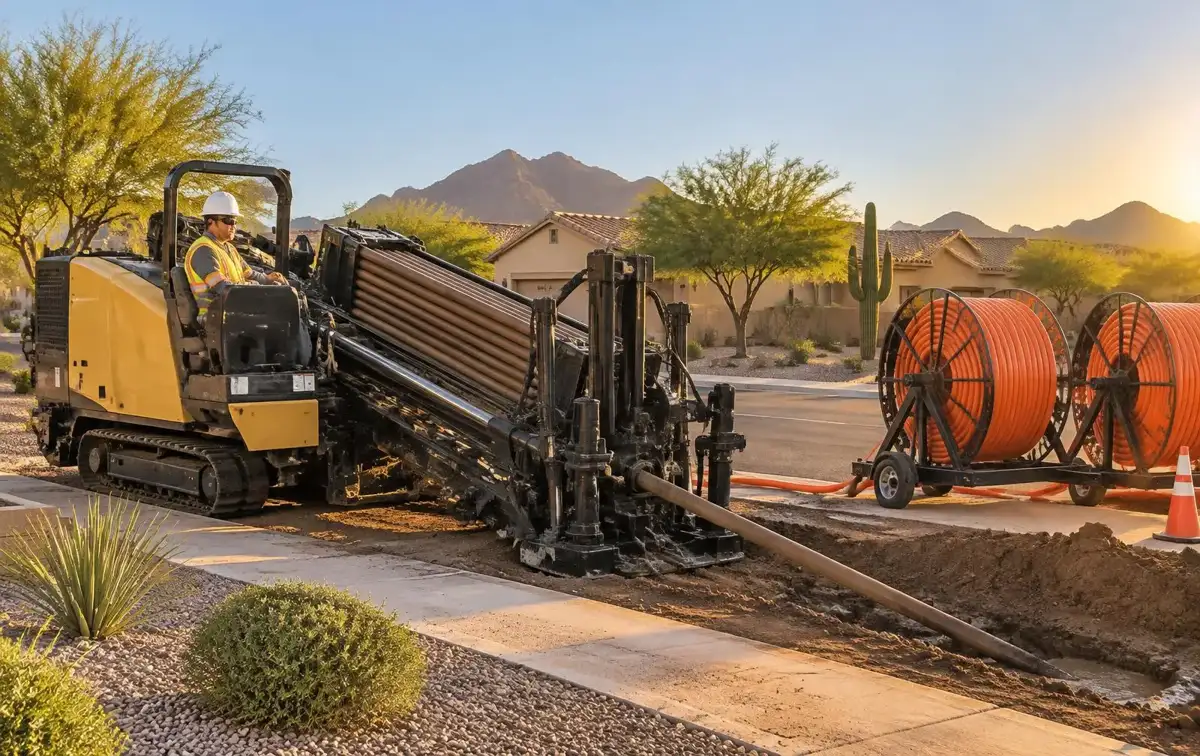
A directional drill rig is a large, heavy machine. It needs a specific footprint to operate safely and efficiently. The physical layout of the job site directly impacts the estimate.
Work in an empty dirt lot in Queen Creek is straightforward. The crew parks the trucks where they need them, sets the rig at the perfect angle, and starts working. Setup takes minutes.
Work in a congested commercial center in Mesa or Chandler requires extensive logistical planning. If the rig must sit in an active parking lot, the contractor must account for pedestrian safety, vehicle traffic, and noise restrictions. If block walls, mature trees, or existing electrical transformers block the ideal launch angle, the crew must excavate a launch pit. Digging, shoring, and backfilling launch and receive pits adds substantial labor and material costs to the project.
Traffic control is another major variable. Working in the public right of way requires approved barricade plans, municipal permits, and often dedicated flaggers. Closing a lane on a major arterial road limits work hours. If the city restricts lane closures to nighttime hours only, the bid must include premium shift pay for the crew, portable light towers, and overnight security for the equipment.
Fluid Management and Disposal
Directional drilling relies on drilling fluid to lubricate the bit, stabilize the hole, and carry the soil cuttings back to the surface. Managing that fluid is a massive part of the operation.
The crew pumps hundreds of gallons of bentonite clay and water into the bore path. A vacuum truck pulls the returning mud out of the entry pit. Once the vacuum truck is full, it must leave the site, drive to an approved disposal facility, pay a dump fee, and return to the site.
Hard soil requires more fluid. Larger diameter pipes require larger holes, which require exponentially more fluid. Long bores require constant fluid management. The cost of water, bentonite, polymer additives, vacuum truck operation, and commercial dump fees are all built into the overall estimate. Contractors working far from disposal sites must charge more for the trucking time.
Final Restoration Requirements
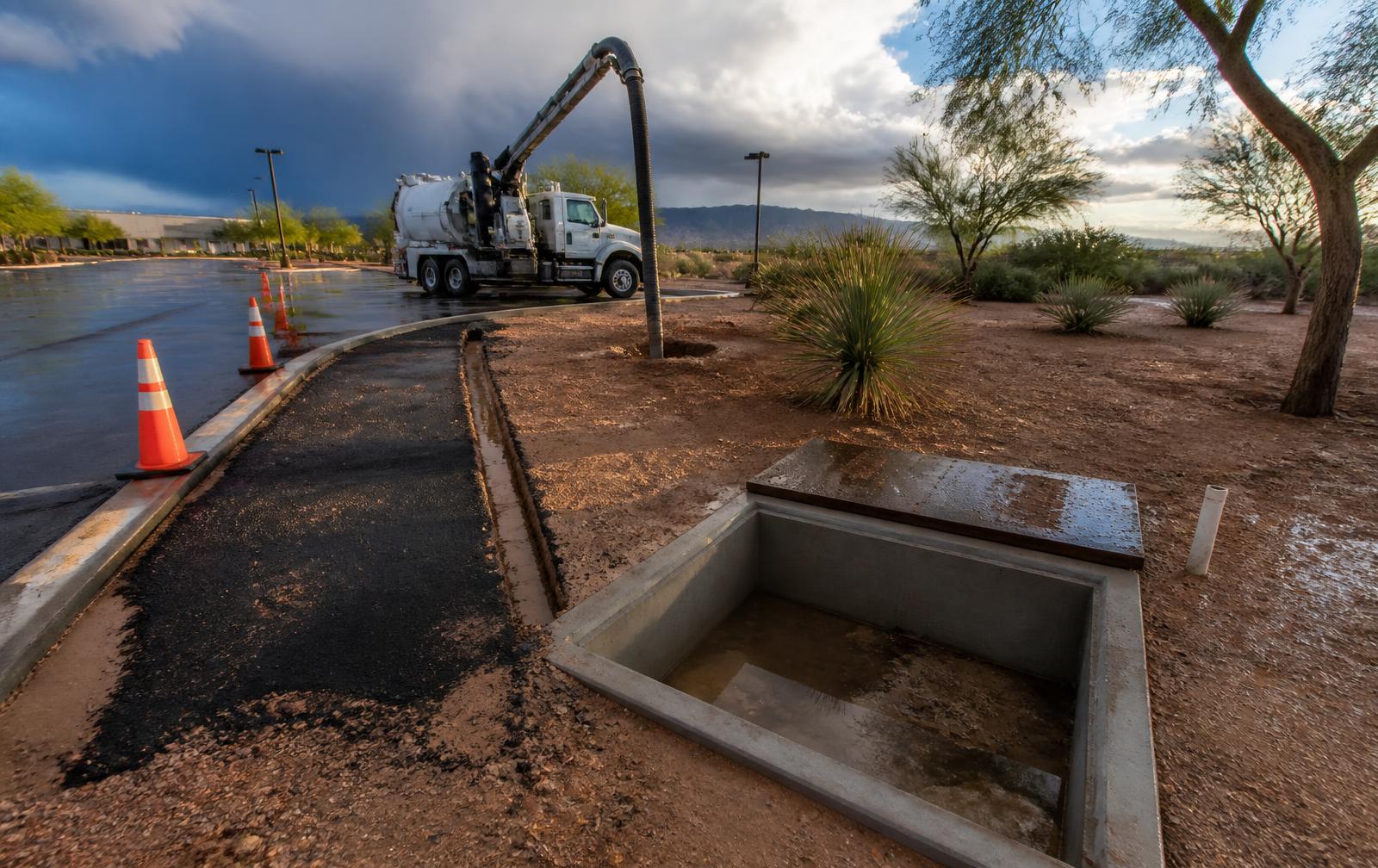
Every horizontal drill requires digging. Even trenchless technology requires physical access points. The crew must dig entry pits, exit pits, and potholes to visually verify every existing utility line they cross.
Restoration costs depend heavily on what the crew has to cut through. Exposing a water line in a dirt shoulder requires zero hardscape restoration. The crew hydro excavates the dirt, confirms the line depth, and backfills the hole when finished.
Potholing through a newly paved arterial road is a different story. The crew must saw cut the asphalt, excavate, backfill with engineered slurry, and apply a hot mix asphalt patch that meets strict municipal standards. Working in a commercial parking lot might require matching decorative concrete or replacing expensive landscaping.
Bids must clearly state who carries the financial weight for this restoration. A low bid often excludes final concrete replacement or asphalt patching, leaving the property manager or general contractor holding a secondary bill. Professional estimates include line items for standard restoration.
Conduit Size and Bundle Configurations
The material going into the ground dictates the size of the hole. A 2 inch pipe requires a 3 inch bore hole. Pulling a bundle of four 2 inch pipes requires a 12 inch bore hole.
A larger hole takes more time, more reaming passes, and more fluid. The crew must drill the initial pilot hole, remove the drill head, attach a fluted reamer, and pull it back through the hole to expand the diameter. For large bundles, they may have to make three or four separate reaming passes before the hole is clear enough to pull the product.
This directly impacts the fiber conduit installation cost. Estimates increase alongside the outer diameter of the conduit bundle. Upgrading from a single duct to a dual duct adds minimal labor, but jumping to a large multiple duct bank requires heavier equipment and slower pullbacks.
Estimating Fiber Conduit Installation
Placing the pipe in the ground is only one phase of a fiber build. The complete pathway preparation covers the route from the point of presence to the final splice location.
Materials matter. High density polyethylene is the standard for directional boring because it bends without breaking. The cost of the pipe itself fluctuates with petroleum markets, but it remains a minor fraction of the total build. The real costs lie in the vaults, the handholes, and the final pathway preparation.
A complete backbone build requires splice vaults placed at strategic intervals. The crew must excavate the vault location, set a gravel base, place the concrete or polymer concrete box, bring the conduits inside, and seal the entries to prevent water and silt from entering. Proper vault sets prevent monsoon flooding issues and keep the fiber hardware dry.
Once the pipe is in the ground and tied to the vaults, the crew must prove the pathway. This involves blowing a foam dart or pulling a solid mandrel through the entire length of the conduit to ensure it has not collapsed or kinked during the pullback. Finally, they install a pull string or mule tape so the fiber optic splicing crew can easily pull their cable. A precise estimate details every single one of these finishing steps.
How to Compare Directional Drilling Contractors in Gilbert AZ
Not all directional drilling contractors gilbert az structure their bids the same way. Handing the same blueprint to three different companies will often yield three wildly different numbers. The lowest number is rarely the actual final cost.
When comparing estimates, look for specific inclusions and exclusions.
Review the rock clause. Most contractors include a standard dirt rate and a secondary rock rate. If they hit caliche or solid rock, the contract allows them to switch to an hourly rate or a higher per foot rate to compensate for the lost time and damaged tooling. Make sure you understand exactly what triggers this clause and how they document the soil change.
Check the utility locating terms. Safe boring requires independent utility locating and hydro excavation. Ensure the contractor takes responsibility for calling Arizona 811, hiring a private locator for private property lines, and physically potholing every single crossing. A contractor who skips potholing is a massive liability to your site.
Verify the traffic control and permit responsibilities. Municipalities charge fees for right of way permits and barricade plans. Determine whether the contractor pays these fees directly or passes them through as a separate invoice.
Demand line item clarity. A lump sum estimate hides the true cost of the work. You need to see the breakdown for mobilization, production footage, vault installations, potholing, and restoration. This allows you to evaluate the fairness of the pricing and makes it much easier to negotiate scope changes if the alignment shifts during construction.
Get an Exact Number for Your Next Build
Stop guessing on your underground construction budgets and relying on contractors who issue change orders the moment they hit hard soil. Precision boring requires precise planning. Fampa Construction LLC provides fully scoped, transparent estimates for horizontal directional drilling, fiber optic installation, and dry utility construction. We work with internet service providers, carriers, and general contractors to build reliable infrastructure across the Phoenix Metro area. Contact our Gilbert office today to review your blueprints and get an exact number for your project.
Need an Arizona HDD or Fiber Contractor?
Talk to a Fampa Construction project manager, site walks scheduled fast and bids built around your scope, footage, and schedule.