Striking a buried line stops your job immediately. Crews stand down, schedules slip, and repair bills pile up fast. Preventing underground utility damage Phoenix AZ requires knowing exactly what is beneath the surface before an excavator bucket breaks ground. General contractors and internet service providers cannot rely on old maps or guesswork. This guide explains why strikes happen on commercial sites, how hard desert soil multiplies the risk, and the specific methods used to protect infrastructure during fiber and dry utility construction across the Valley.
The Leading Causes of Underground Utility Damage Phoenix AZ
Most utility strikes happen because the field crew lacks accurate information about what lies below. Construction teams rely on utility maps, but those records rarely show the exact depth or horizontal alignment of existing lines. As-built drawings often reflect the original design, not the field modifications made during installation.
Outdated or incorrect locates are the primary driver of damage. Arizona 811 notifies public utility owners to mark their lines, but it does not cover private utilities. Parking lot lighting, private fiber rings, campus water lines, and secondary power runs belong to the property owner. If a general contractor digs based only on public 811 marks, they are digging blind around private infrastructure.
Operator error and rushed schedules also cause strikes. When crews skip hand digging or potholing within the established tolerance zone, machinery easily catches shallow lines. A backhoe pulling trench through an intersection can sever a fiber-optic backbone in seconds if the crew assumes the line is buried deeper than it actually is.
How Arizona Soil Conditions Increase Strike Risks
Phoenix sits on extremely challenging geology. The soil profile across the East Valley contains thick bands of caliche, which is a rock-hard natural cement that binds dirt, sand, and gravel. Trenching through caliche requires heavy equipment and immense breakout force.
This required force masks the physical feedback operators normally use to detect buried obstacles. In softer soils, an experienced equipment operator can feel the bucket teeth scrape against PVC conduit or a concrete duct bank. In caliche, the excavator is already straining to break the ground. The machine will tear right through warning tape, conduit, and copper lines before the operator registers a change in resistance.
Cobble and river rock present similar problems in areas near the Salt River. Loose rocks shift under pressure, transferring the force of a bucket into adjacent soil. A large rock pushed against a buried water main can crack the pipe even if the bucket never touches the utility directly.
The Financial and Schedule Impact of a Strike
The direct cost of repairing a severed utility is only a fraction of the total penalty. Fixing a damaged residential water service line runs a few thousand dollars. Severing a major fiber-optic backbone easily costs between $10,000 and $50,000 depending on the fiber count, the complexity of the splice, and the duration of the internet outage.
Indirect costs hit the general contractor much harder. When a backhoe cuts a gas line, the fire department shuts down the street. The entire site stops working. Heavy equipment sits idle while operators wait on standby. A one-hour repair can ruin a full day of production.
Utility strikes also damage your reputation. Internet providers expanding their networks depend on reliable contractors to install last-mile fiber without disrupting existing services. A contractor with a history of hitting lines will struggle to win bids with major ISPs, carriers, and municipalities.
Steps to Prevent Underground Utility Damage Arizona
Protecting underground infrastructure requires a strict, phased approach. You cannot rely on a single source of truth. You must verify every utility crossing.
Call 811 and Hire Private Locators
Contacting Arizona 811 is mandatory by law. Contractors must submit a ticket at least two full working days before excavation begins. The public utilities will spray paint or place flags to mark their alignments.
Because 811 only marks public lines, commercial projects require private locating services. Private locators use Ground Penetrating Radar (GPR) and Electromagnetic (EM) locators to find abandoned lines, private lighting circuits, and unmapped water pipes. Combining public and private locates provides a comprehensive map of the subsurface.
Pothole Every Crossing
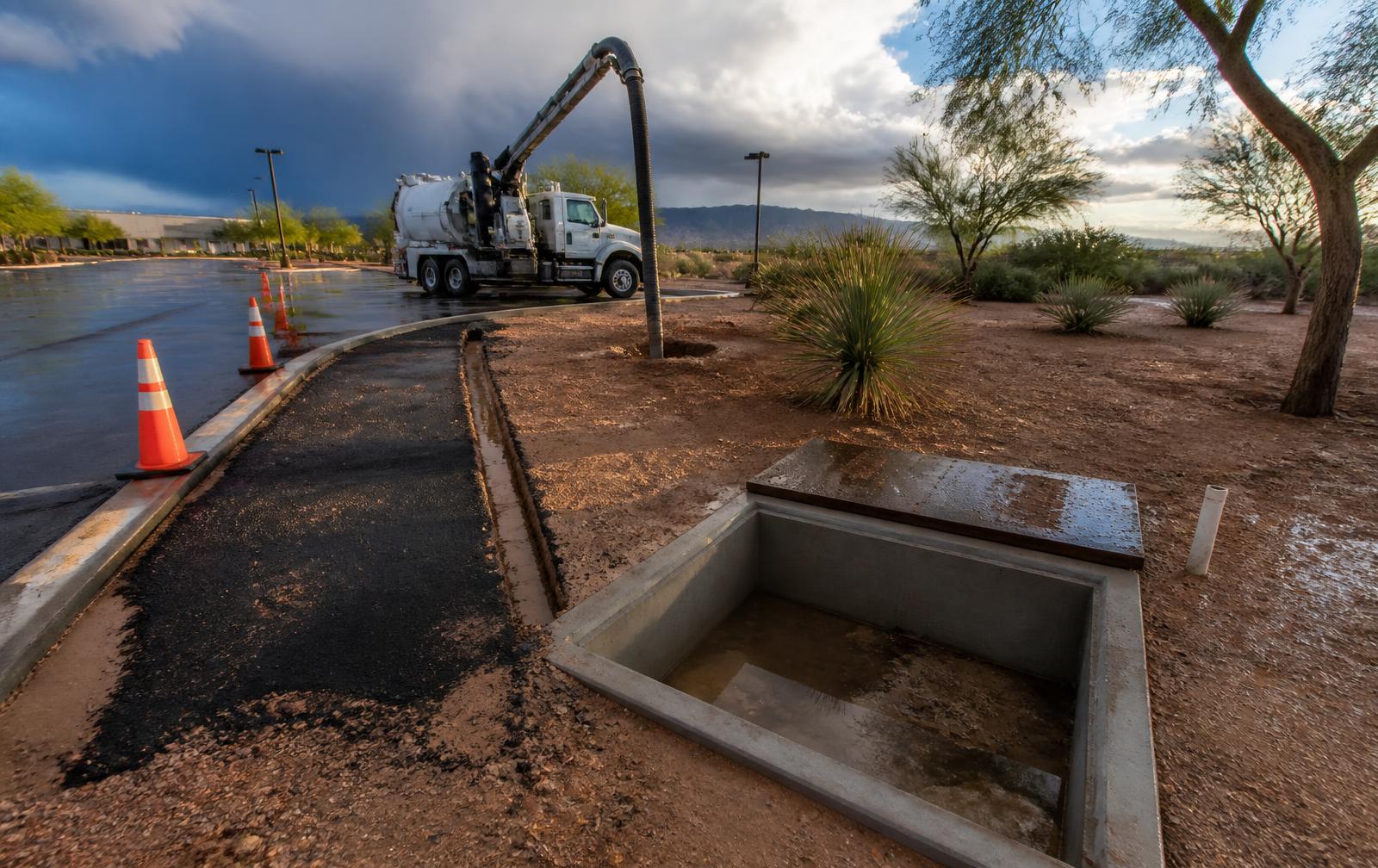
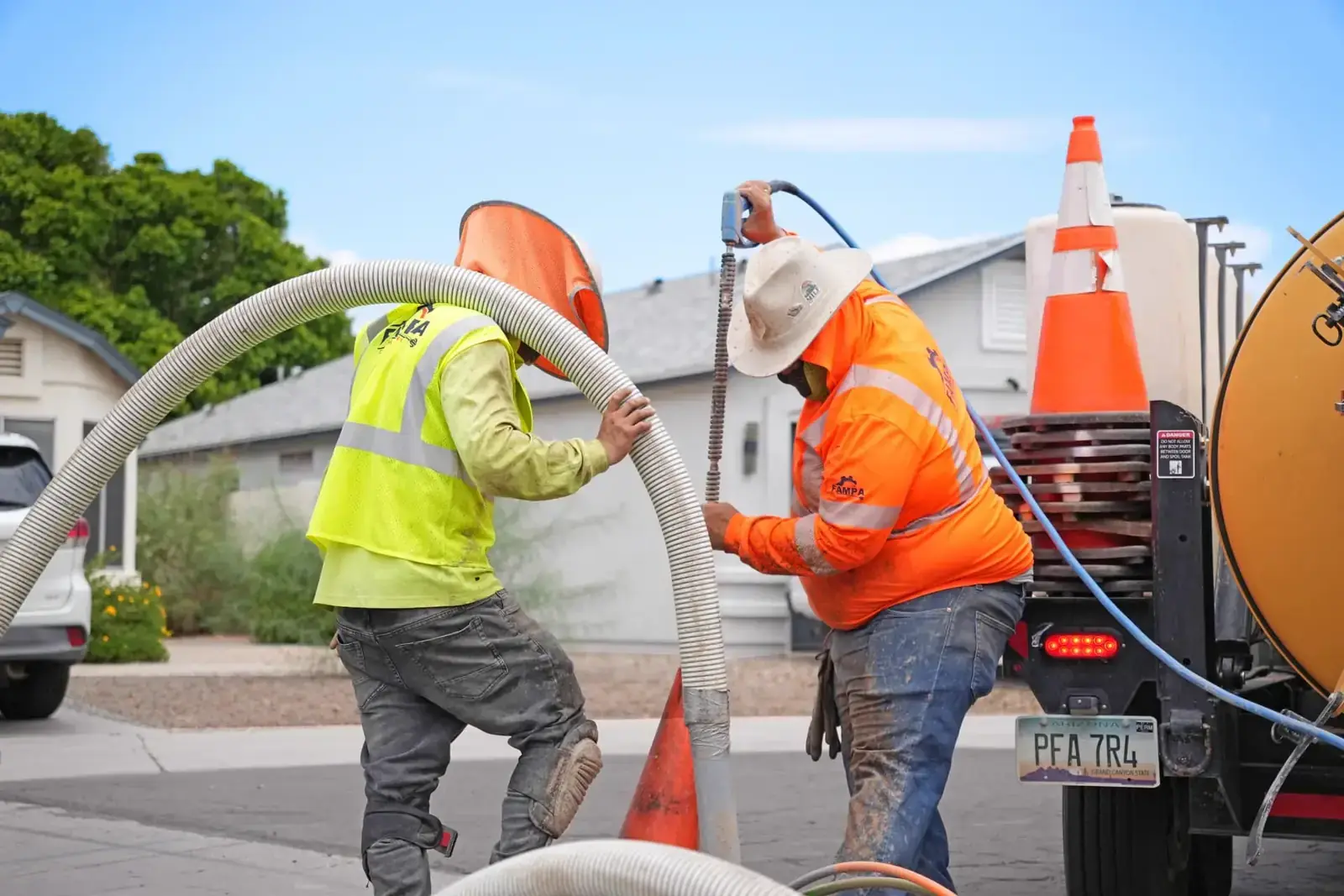
Paint on the dirt is a guideline, not a guarantee. Visual confirmation is the only way to prove exactly where a utility sits. Potholing (also known as daylighting) uses vacuum excavation to safely expose buried lines.
A vacuum truck uses highly pressurized air or water to break up the soil, then vacuums the debris into a holding tank. This method completely removes the dirt around the utility without damaging the pipe or conduit. Once the line is exposed, crews can measure its exact depth and diameter, ensuring the new installation clears it safely.
Respect the Tolerance Zone
Arizona law defines a tolerance zone around marked utilities. This zone extends 24 inches from the outside edge of the buried facility in all directions. If you are digging within this 24-inch window, you must use non-destructive methods like hand tools or vacuum excavation. Using mechanical equipment inside the tolerance zone is a leading cause of underground utility damage Phoenix.
Why Horizontal Directional Drilling Reduces Accidental Strikes
For ISPs and carriers building new networks, trenchless construction is the safest way to install conduit. Horizontal Directional Drilling (HDD) avoids the massive disruption of open-cut trenching.
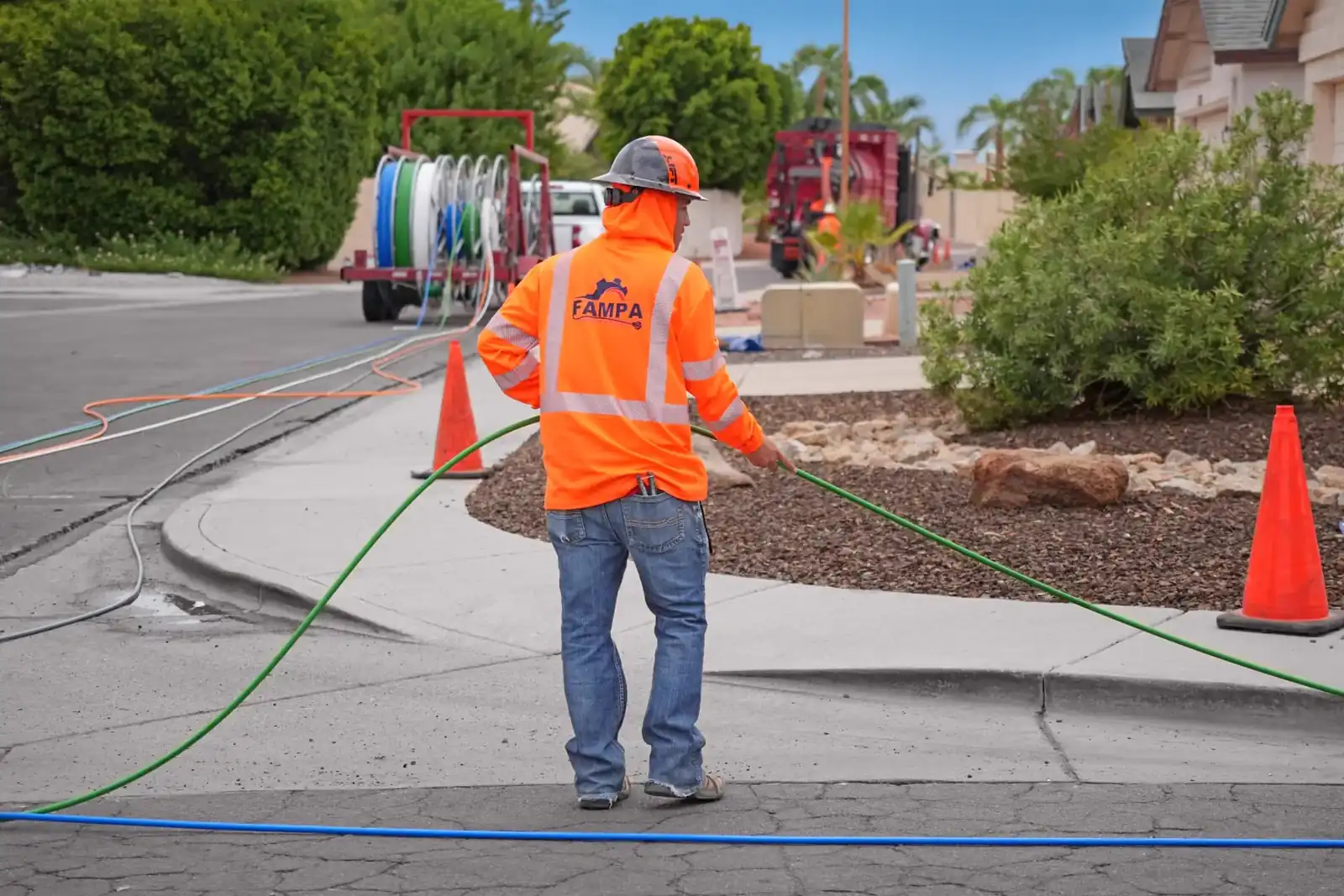
Instead of opening a long, continuous ditch, a drill rig bores a small pilot hole along the planned alignment. A locator tracks the drill head from the surface, guiding it over, under, or around existing utilities. Once the pilot bore is complete, the crew pulls the new fiber-optic conduit back through the hole.
HDD significantly shrinks the strike zone. You still must pothole every crossing to visually confirm the drill head passes safely, but you eliminate the risk of an excavator bucket blindly ripping through the corridor. This makes directional boring the preferred method for dry utility construction under active streets, pristine landscaping, and crowded right-of-ways.
Fiber-Optic Installation Safety Protocols
Building out internet infrastructure requires working inside tight utility corridors. When installing end-to-end underground fiber networks, the risk of intersecting power lines and water mains is high. Safe installation requires detailed bore planning.
A bore plan maps the exact elevation of the drill path against the precise depths of the potholed utilities. The crew plans entry pits and exit pits in safe zones, avoiding areas with high utility congestion. During vault sets and handhole installs, crews pre-scan the excavation footprint to ensure they do not crush unknown lines while setting heavy concrete or polymer structures.
Protect Your Next Build with Fampa Construction LLC
Striking utilities costs money, damages relationships, and ruins schedules. Your project requires a contractor who treats underground safety as an exact science. Fampa Construction LLC provides precision Horizontal Directional Drilling, fiber-optic installation, and dry utility construction across the Phoenix Metro area, including Gilbert, Mesa, Chandler, Tempe, Queen Creek, San Tan Valley, and Apache Junction.
We handle bore planning, utility locating, potholing, and full-scope conduit runs for ISPs, carriers, and general contractors. We map the hazards, expose the conflicts, and bore safely through the hardest soils in the Valley. Contact Fampa Construction LLC today to schedule your next utility installation.
Need an Arizona HDD or Fiber Contractor?
Talk to a Fampa Construction project manager, site walks scheduled fast and bids built around your scope, footage, and schedule.